
Introduction
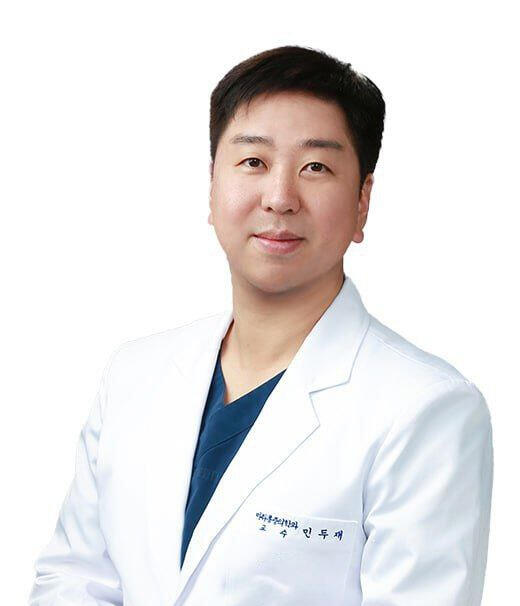
Greetings,I am Too-Jae Min, President of the Cannabinoid Association.Medical cannabis is emerging as a vital game-changer in the treatment of rare diseases, sparking active research into its efficacy worldwide.The Cannabinoid Association was founded to systematically research the utility of medical cannabis and provide education on its proper use in Korea, a region that has previously been uncharted territory for this field.We remain committed to raising awareness among the public, both domestically and internationally, regarding the benefits and safe application of medical cannabis.We ask for your continued interest and active participation.Thank you.Too-Jae Min President, The Cannabinoid Association
Mission & Activities
Our Mission
Our primary objective is to research the effective and safe application of medical cannabis. We aim to achieve this by creating a forum for information exchange through regular and special academic seminars, focusing on the utility and indications of medical cannabis currently used in Korea for treating rare diseases.Major Activities
1. Education & Seminars: Hosting academic seminars and training programs specifically for clinicians.2. Network Facilitation: Building and activating professional networks to ensure the proper utilization of medical cannabis.3. Infrastructure Building: Establishing a solid foundation for medical cannabis research and industrial infrastructure.

Patients news
A Mother’s Plea: The Story of Dr. Hwang Ju-yeonHere is the story of Dr. Hwang Ju-yeon, an OB/GYN specialist and the mother of a 9-year-old son suffering from Lennox-Gastaut Syndrome (LGS), a rare and intractable form of epilepsy.Her son showed signs of developmental delay from birth, and by the age of 19 months, severe epileptic symptoms began to manifest. Dr. Hwang exhausted every possible medical option, including drug therapies, a ketogenic diet, and even a corpus callosotomy (brain surgery). Despite these efforts, the symptoms recurred, the child's development stalled, and he remained in a state where he could not even make eye contact.In this desperate situation where no other treatments remained, Dr. Hwang and her husband discovered CBD oil (Cannabidiol oil) through overseas medical literature. After confirming clinical results showing that CBD—a hemp-derived component—is effective for pediatric epilepsy, muscle pain, and sleep disorders with minimal side effects (such as hallucinations), she directly purchased CBD oil from the United States, where it is legally distributed, and administered it to her son.The results were astonishing. The frequency of seizures decreased, the severity of symptoms was alleviated, and most importantly, her son’s eyes regained focus. His EEG results also showed significant improvement, to the point where his attending physician recommended continuing the dosage.However, in July 2017, during her second purchase, the product was seized by customs, and Dr. Hwang underwent a prosecutorial investigation. While CBD oil is often treated as a dietary supplement abroad, it is classified as a strict narcotic in South Korea. Fortunately, she received a suspension of indictment as she proved it was for her son's treatment, but as both a physician and a mother, she felt a deep sense of frustration at Korea’s rigid legal system.Dr. Hwang emphasizes the need for a clear distinction between THC and CBD. Unlike THC, which causes psychoactive effects (hallucinations), CBD offers significant positive effects for epilepsy improvement and pain relief with low dependency. In fact, the USDA and various European countries legally manage industrial hemp and its extracts based on THC content. Furthermore, the US FDA approved 'Epidiolex,' a CBD-based drug, in 2018, and the DEA removed it from its list of controlled substances, recognizing its safety.Currently, the Ministry of Food and Drug Safety (MFDS) in Korea permits the import of only a very limited number of drugs, such as Epidiolex. Dr. Hwang criticizes this, stating, "Allowing only one specific drug undermines the very purpose of legalizing medical cannabis." She urges the MFDS to make proactive changes to allow the import and sale of various CBD products beyond Epidiolex and to revitalize domestic research.Ultimately, Dr. Hwang argues that CBD must be removed from the list of narcotics. She concludes with a desperate hope:"I earnestly hope that with the help of a safe substance like CBD, children with epilepsy and their families can escape their suffering, and more people can improve their quality of life."
Headline news
Foundation of the Korea Cannabinoid Association
The Cannabinoid Association announced its official establishment on the 23rd of last month. Marking a significant milestone, this is Korea's first academic society dedicated to the utilization of medical cannabis, widely known for components such as CBD.According to the Association, its primary objectives are to conduct academic research, develop technologies, and promote the industrial application of cannabinoids. Through these efforts, the Association aims to drive innovation in the fields of health and science. Furthermore, it plans to actively engage with patients suffering from rare diseases to improve their quality of life and support their treatment.The Association brings together a diverse group of experts from various fields, including medicine, pharmacy, life sciences, and manufacturing specialists. It is committed to gathering insights from all sectors related to cannabinoids in Korea and establishing a robust cooperative network both domestically and internationally.Min Too-Jae, President of the Association and Professor at the Department of Anesthesiology and Pain Medicine at Korea University College of Medicine, stated:"Cannabinoids have already demonstrated remarkable potential for health through numerous studies. Our goal is to leverage this potential to contribute to Korea's medical and bio-industries. We remain committed to achieving scientific advancements through continuous research and social engagement."

Update news
Insurance Coverage for Medical Cannabis 'Epidiolex' Set to Expand
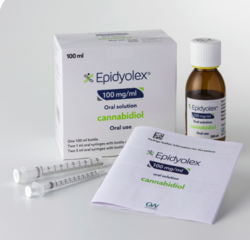
The expansion of insurance coverage for the medical cannabis product "Epidiolex Oral Solution" is imminent. The National Health Insurance Service (NHIS) has entered final pricing negotiations with the Korea Orphan & Essential Drug Center (KOOD).Until now, reimbursement for Epidiolex has been limited to Lennox-Gastaut Syndrome (LGS) and Dravet Syndrome (DS). Once the negotiations are successfully concluded, patients with Tuberous Sclerosis Complex (TSC) are also expected to gain access to the treatment.According to industry sources on the 8th, KOOD and the NHIS have commenced negotiations regarding the expansion of coverage for Epidiolex.Currently, the maximum reimbursement price for Epidiolex for the two covered conditions is set at 1,395,496 KRW. Under the special calculation system for rare diseases, the patient co-payment rate is applied at 10%.Medical cannabis is currently supplied and managed by KOOD. The volume of prescriptions has been steadily increasing, rising from 2,351 in 2022 to 2,569 last year.Epidiolex received US FDA approval in 2018, and approval for use in Tuberous Sclerosis Complex followed in 2021. Although the drug was introduced in Korea in 2019, insurance coverage had previously been restricted to Lennox-Gastaut Syndrome and Dravet Syndrome only.
Annual Fundraising and Expenditure Report
Email: [email protected]
Address: N156, 6F, 602, Yeongdong-daero, Gangnam-gu, Seoul, Republic of Korea
Registration No.: 506-82-12752
Related Sites


